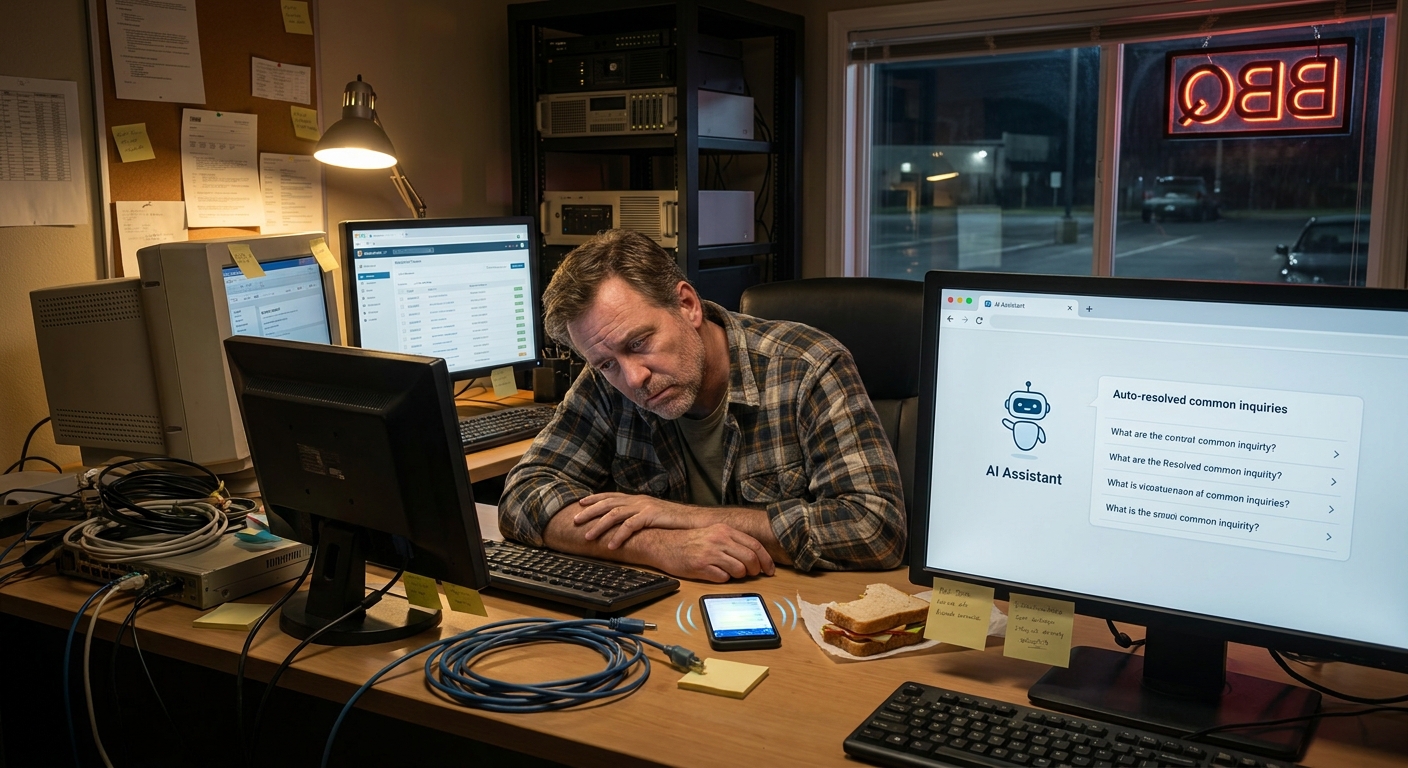
Tired Of Sloppy Team Messages? Simple AI Internal Communication Automation Workflows That Actually Help Your Team Talk
Let Me Paint the Picture
I was sitting in a coffee shop in Mount Pleasant, watching a manager scroll through what had to be 200+ Slack messages. She sighed, looked at her laptop, and said out loud, “I have no idea what’s going on in my own company.”
Half her team was in Charleston, a couple people were remote in Raleigh and Charlotte, and everyone was drowning in pings, emails, DMs, and random Google Docs.
The wild part is… this wasn’t a “big” company. It was a 12-person team.
That’s when it hit me: most people don’t need more tools. They need better ai internal communication automation workflows so their tools actually talk to each other—and so their team can stop living in chaos.
Let’s Get Honest for a Second
Communication isn’t your problem. You actually have plenty of it.
- Slack channels that never stop
- Emails that get buried by lunch
- Text messages from the field at 6:30 AM
- Random notes from meetings that never make it anywhere useful
The real problem is this: nobody knows what matters, and nobody has time to dig for it.
That’s where simple ai workflow automation for small business can actually be a life-saver. Not “robots take your job” stuff. More like “robots clean up your group chat” stuff.
Let’s Break This Down
When I say ai internal communication automation workflows, I’m talking about a few simple things:
- Letting AI sort, tag, and summarize your messages
- Sending people only the updates that matter to them
- Turning messy chats into clean action items
- Keeping everyone in the loop without 42 reply-all emails
Not a sci‑fi movie. Just basic automation that takes the “where is that message?” stress out of your day.
The Root of the Problem
Here’s the part no one talks about:
- Your team doesn’t have a communication tool problem.
- They have a “who needs to see what, and when?” problem.
If your project manager in Greenville needs daily task summaries, but your field tech in North Charleston just needs the three jobs for tomorrow… why are they both getting the same 20-paragraph update?
AI is really good at filtering, summarizing, and routing info. And if I’m being real, it’s already better at that than most humans (including me).
Here’s the Fun Part: Simple Workflows You Can Steal
Let’s talk through some business tasks you can automate with ai workflows that focus only on internal communication. No giant IT project needed.
1. Daily “Here’s What You Missed” Summary
Problem: Your team walks into the day already behind, scrolling through yesterday’s messages.
Simple workflow:
- Connect Slack/Teams/email to an AI tool (Zapier, Make, or a custom chatbot).
- Have AI scan specific channels or threads from the last 24 hours.
- Ask it to:
- Summarize major decisions
- List open questions
- Highlight due dates and owners
- Send a short recap at 8:00 AM to a “Daily Digest” channel or email list.
Result: Instead of hunting through 97 messages, your team gets a 60-second catch-up and can actually start working.
2. Meeting Notes That Don’t Die in Someone’s Notebook
Problem: You meet, you talk, you “decide,” and then… no one remembers who’s doing what.
Simple workflow:
- Record your meeting audio (Zoom, Teams, or an app like Otter).
- Send the transcript to an AI and tell it:
- Pull out action items with owners and due dates
- Summarize key decisions in 5–10 bullet points
- Automatically post those notes in your project channel or email them to attendees.
Could you do this manually? Sure. Will it actually happen every time? You and I both know the answer.
3. “Don’t Bug Me Unless It’s Important” Alerts
Problem: Your managers get pinged for everything. Big stuff, small stuff, random GIFs included.
Simple workflow:
- Pick a few key phrases or topics: “client refund,” “site safety,” “server down,” “angry customer.”
- Use AI to scan Slack or email for those themes (not just exact words).
- When it finds something serious, it:
- Summarizes the thread in 2–3 sentences
- Tags the right manager or sends a text with that summary
Now your leaders don’t have to live inside every channel, but they won’t miss the fires either.
4. New-Hire “Who’s Who” and FAQ Bot
Problem: New people are scared to ask “dumb” questions, so they quietly guess. And that gets expensive.
Simple workflow:
- Feed AI your org chart, SOPs, and a few common Q&As.
- Drop it into Slack or Teams as a simple chatbot.
- Let people ask:
- “Who handles invoices?”
- “Where’s the safety procedure for job sites?”
- “Who approves PTO?”
You’re not replacing HR. You’re just giving HR fewer “hey, quick question…” interruptions.
5. Weekly “What Actually Happened” Report
Problem: You feel busy all week but can’t explain what got done.
Simple workflow:
- Connect your task tool (Asana, Trello, ClickUp, whatever) plus Slack/email.
- Have AI pull:
- Finished tasks
- New projects started
- Bottlenecks or stalled items
- Send a “Week in Review” report to leaders or the whole team.
Now your Monday meeting in Columbia or Greenville starts with facts, not vibes.
A Real-Life Moment
Let me tell you about Ryan, who runs a 15-person service company based between Summerville and North Charleston.
His team was drowning in texts from techs in the field, messages in a private Facebook group (yes, really), and random emails from clients. Nobody knew:
- Which jobs were actually confirmed
- Who was responsible for follow-up
- What got promised to which customer
Here’s what we set up:
- All job info goes into one form on a tablet in the truck.
- AI reads the form and:
- Posts a clean summary in a “Jobs Today” Slack channel
- Tags the assigned tech
- Flags anything unusual (“customer upset,” “urgent,” etc.) for Ryan
- At 4:30 PM, AI sends Ryan a daily wrap-up:
- Jobs finished
- Jobs pushed to tomorrow
- Any issues or complaints to follow up on
After a week, he said, “I actually know what’s happening without calling five people. That’s new.”
Was it perfect? Nope. (We had to tweak the prompts twice because it kept over-highlighting “minor” issues.) But the chaos dropped fast.
Let’s Make This Simple
If ai internal communication automation workflows feel big and scary, here’s a simpler way to think about it:
- Where does important info get buried right now?
- Who keeps asking the same questions over and over?
- What update do you wish just showed up automatically every day or week?
Start with just one of those and build a tiny workflow around it.
A Quick Reality Check
I don’t know everything, but here’s what I see over and over:
- Most small teams don’t need more meetings.
- They need better summaries of the meetings they already have.
- They don’t need 10 more apps.
- They need the apps they have to send the right info to the right people at the right time.
That’s exactly what ai workflow automation for small business is good at when you keep it simple and practical.
If You Only Remember One Thing…
Internal communication doesn’t have to feel like chasing a squirrel around your inbox.
Use AI to:
- Summarize the noise
- Highlight what matters
- Route info to the right people
That’s it. No magic. Just some smarter business tasks you can automate with ai workflows so your team can actually work instead of constantly “checking in.”
What You Can Do Next
Here’s an easy starting point you can try this week:
- Pick one channel or email thread that’s always chaotic.
- Set up a simple AI summary that runs once a day.
- Send that summary to whoever needs to know.
See how people feel after a week. Do they feel more in the loop? Less stressed? That’s your sign you’re heading in the right direction.
And if you’re sitting in a coffee shop in Charleston, or a bar in Greenville, staring at Slack like it’s your enemy… you don’t have to fix everything at once. Just start with one tiny workflow and build from there.