AI Risk Management For Small Business In Charleston: Simple Ways To Stop Little Problems From Becoming Big Ones
A few weeks ago I was sitting at a small table at Kudu in downtown Charleston with a local business owner named Mike.
HVAC company. Three trucks. Eight people. Busy, but always one bad day away from chaos.
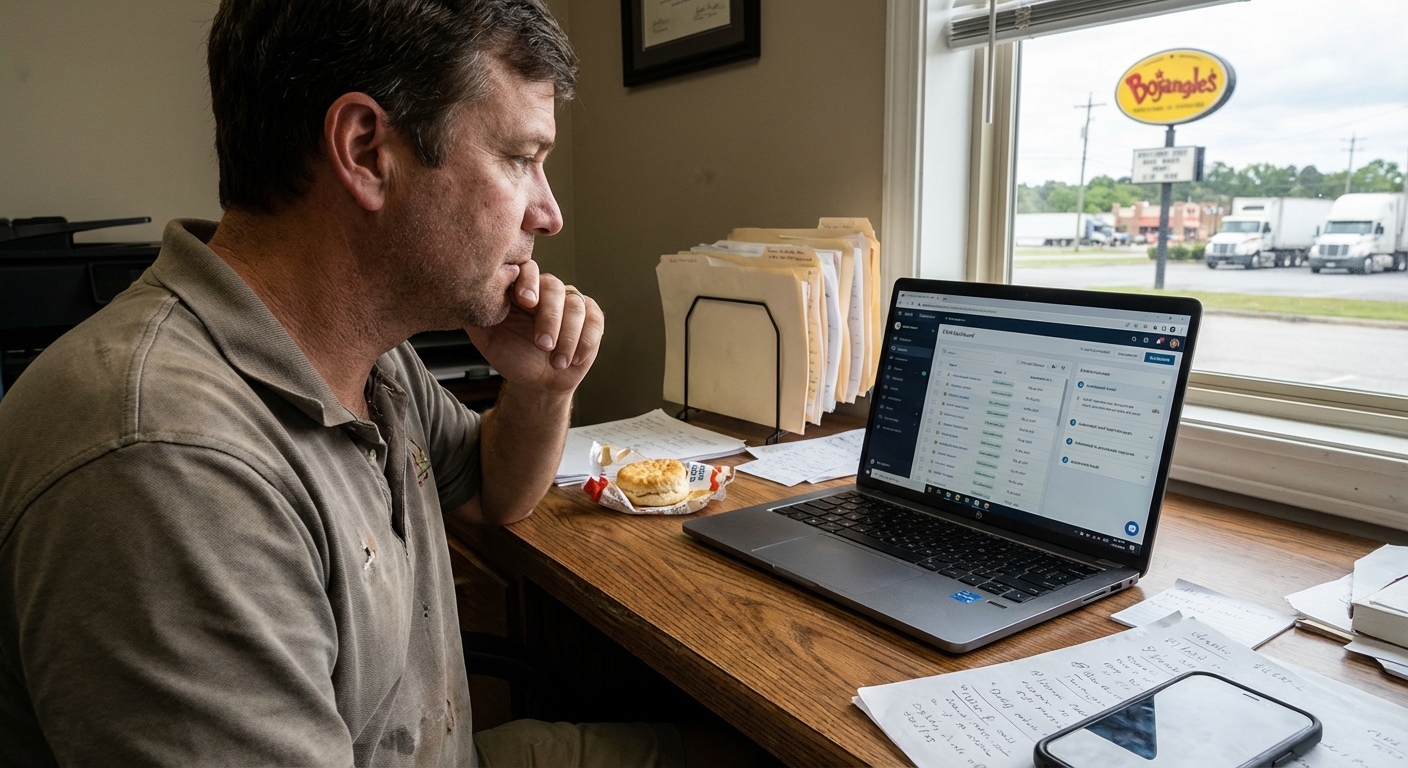
He leans in and goes, “Man, I’m not scared of AI taking my job. I’m scared of one missed email, one bad review, or one slip-up costing us a big client.”
Then he says, “Everybody talks about AI for marketing. I just want fewer surprises.”
That, right there, is AI risk management for small business Charleston in a nutshell.
Not robots. Not sci-fi. Just using smart tools so small mistakes don’t turn into expensive messes.
Let’s Get Honest For A Second
If you run a small business around Charleston, Mt. Pleasant, North Charleston, Summerville, or honestly anywhere in the Lowcountry… you don’t have a “risk department.”
You have:
- You, trying to remember everything
- A couple people who wear 5 hats each
- Some mix of email, text, sticky notes, and “I’ll remember that later”
And that works. Until it doesn’t.
The biggest “risks” for most small businesses aren’t hurricanes or hackers. It’s stuff like:
- Missing an important email from a good client
- Forgetting to follow up on a quote
- Letting an unhappy customer stew instead of responding fast
- Sending out the wrong price or old contract language
- Having private info sitting in random inboxes with no real control
And here’s the thing: these are exactly the kinds of problems AI is actually good at catching and preventing.
Not magic. Just better guardrails.
Let’s Make This Simple: What AI Risk Management Really Means
Forget the big fancy definition. For small businesses, AI risk management basically means:
- Spotting patterns that usually lead to problems
- Giving you early warning signs
- Helping you respond fast and consistently
- Keeping records clean so you can prove what happened if needed
So when we talk about ai workflow automation for small business, we’re really talking about:
- Automating the boring, risky stuff people forget
- Creating simple “if this happens, do that” protections
- Letting AI watch the small details 24/7 so you don’t have to
It reminded me of something one owner in Greenville said: “I don’t need more leads. I need fewer screwups.”
The Part No One Talks About: Your Biggest Risks Are Boring
Something I keep seeing: owners think “risk” means lawyers and lawsuits.
But most actual pain is way more basic.
Here are a few quiet risks almost every small business in Charleston is carrying around:
- Communication risk
Messages lost. Promises forgotten. Clients hearing one thing from you and another from your team. - Cash flow risk
Invoices not sent on time. Follow-ups missed. Work done, money not collected. - Reputation risk
Bad review left hanging. Confused customer. Slow reply on Google or Facebook. - Compliance risk
Using old contracts. Missing a clause. Storing sensitive info in sketchy ways.
Boring? Yes. But this is the stuff that drains money and sleep.
Here’s the wild part: a lot of these can be handled with very simple business tasks you can automate with ai workflows.
Stuff that takes a weekend to set up and quietly saves you for years.
Let’s Break This Down: Simple AI Workflows That Reduce Risk
I don’t know everything, but I’ve seen enough Charleston, Mt. Pleasant, and Summerville shops to know what usually works first.
1. Set Up “No-Client-Left-On-Read” Email Protection
Risk: A good client emails you. It gets buried. They feel ignored. They move on.
Fix: Let AI watch and sort your inbox.
A basic AI email workflow can:
- Flag any email from VIP clients or certain domains
- Tag emails as “urgent,” “quote,” “complaint,” “billing,” etc.
- Draft a quick polite response for you to approve
For example:
- If the subject or body mentions “cancel,” “problem,” or “frustrated” → flag red, send you a text.
- If it’s a quote request → create a task in your CRM with the details.
That alone can cut a ton of risk around lost clients and bad reviews.
2. Auto-Follow-Up On Quotes Before They Go Cold
Risk: You send a quote. You mean to follow up. Life happens.
Now the client thinks you’re not interested or not serious.
A simple AI workflow:
- Watches for emails or forms where you send a quote
- Waits 2–3 days
- Drafts a short, personal follow-up email
- Either sends it automatically or asks you to approve with one click
You protect:
- Revenue risk (lost deals)
- Reputation risk (“they never got back to me”)
You can even have AI reword the follow-up to match your voice so it doesn’t sound like a robot (this part’s actually kind of fun).
3. Let AI Watch Your Reviews And Complaints
Risk: a 1-star review sits on Google for 10 days because nobody saw it.
Everyone who Googles you sees that first.
Simple workflow:
- AI checks Google, Facebook, Yelp for new reviews
- Any review under 4 stars gets pushed to your email or Slack
- AI drafts a calm, professional response for you to tweak and post
So instead of:
“They never responded. I’ll never use them again.”
You get:
“They responded quickly and made it right.”
4. Standardize Your “Risky” Replies With AI Drafts
Risk: team members answering touchy questions in different ways.
Refunds. Warranties. Safety issues. Contracts.
You can use AI to:
- Store your preferred “playbook” for tricky situations
- Generate draft replies that follow your rules and language
- Keep tone consistent: calm, kind, clear, no drama
For example:
- “Customer wants refund after 45 days → use this policy template, but keep it friendly.”
- “Customer asking about safety or liability → always include these three points.”
You still approve the message, but AI does the heavy lifting.
This lowers legal and reputation risk without needing a lawyer on every email.
5. Guard Your “Tribal Knowledge” Before It Walks Out The Door
Risk: one key person leaves and suddenly nobody knows how things were done.
Pricing rules, special client quirks, random “we just know this” stuff.
Use AI to:
- Organize your SOPs (standard operating procedures)
- Turn messy notes into clean step-by-step guides
- Make those guides searchable in plain English
Then if someone new joins in Charleston, Greenville, or Columbia, they don’t need to live in your brain.
They can literally ask your internal AI:
“How do we handle after-hours calls for plumbing emergencies?”
And get your answer, your way.
A Story You’ll Relate To
Back to Mike, the HVAC owner in Charleston.
He had this one commercial client downtown. Big contract. Paid well.
But they were picky. The kind of client where one missed call could cost you thousands a month.
Here’s what kept happening:
- Client emails a problem to Mike at 5:30 pm
- Mike is in traffic somewhere between West Ashley and Mt. Pleasant
- Email gets buried under an avalanche of junk by morning
- Client feels ignored → trust drops a little each time
So we set up one simple AI workflow:
- Any email from that client’s domain
- With words like “urgent,” “down,” “not working”
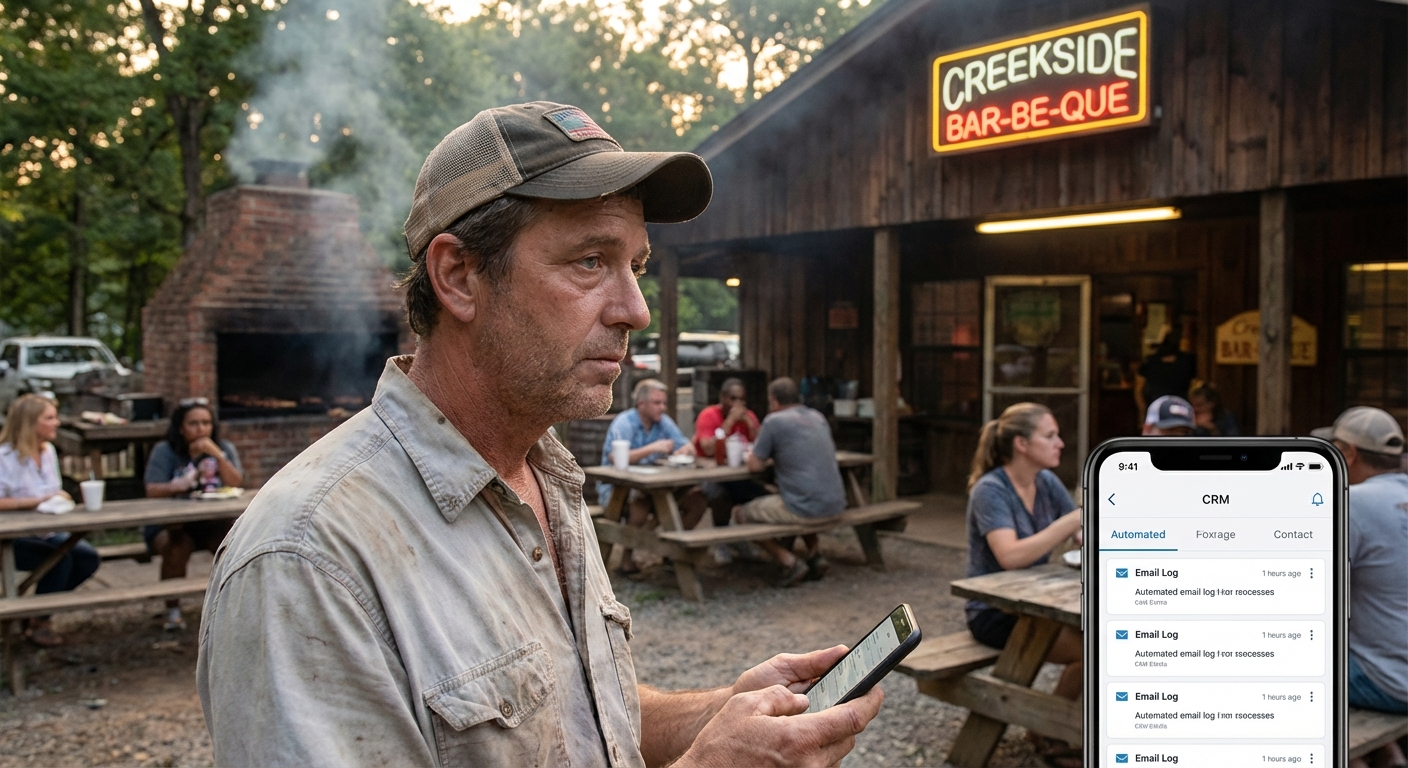
- Got a big red label in Gmail and a text notification to Mike
Then we added a second layer:
- AI drafted a quick reply like:
“Got this, we’re on it. Let me check schedule and I’ll confirm a tech ETA shortly.” - Mike just hit send (or tweaked it) from his phone at a red light
That’s it. No giant system. No full-time IT person.
Two months later, he said: “I haven’t lost a single emergency call from them since. I sleep way better.”
Funny enough, his “AI project” wasn’t about growing. It was about not losing.
Here’s The Backstory On Cost And Complexity
When people hear “AI,” they think “expensive custom software.”
For most small businesses, that’s not what we’re talking about.
Most of the business tasks you can automate with ai workflows use tools you may already have:
- Gmail or Outlook
- Zapier, Make, or similar automation tools
- ChatGPT-style AI or built-in AI in your CRM
Typical costs I see:
- AI tools: 20–60 a month total
- Automation platform: sometimes free, sometimes 20–40 a month
- Setup: one good weekend, or bring in someone to do it with/for you
Compared to one lost client, one angry review, or one missed big job?
The math is pretty friendly.
A Quick Reality Check
Is AI going to remove all risk from your business? No.
You’ll still have crazy days. People will still be people.
But you can absolutely:
- Cut down on missed messages
- Respond faster when things go sideways
- Keep your policies and replies more consistent
- Protect your reputation when mistakes happen
Think of it like adding guardrails to the Ravenel Bridge.
Cars can still hit the side, but at least they don’t go over the edge.
What You Can Do Next (Without Melting Your Brain)
If this all feels a little “too much,” start here. One step at a time.
Step 1: List Your Top 5 “Oh No” Moments
Grab a sheet of paper (yes, actual paper) and write:
- Times you’ve said “We can’t let that happen again.”
- Moments when a small slip turned into a big hassle.
Could be:
- “We forgot to reply to that big quote.”
- “We missed that bad review for a week.”
- “Two team members told the client two different things.”
Step 2: Circle Anything Tied To Messages Or Repeated Tasks
AI is very good at:
- Watching inboxes and notifications
- Doing the same thing again and again
- Turning messy info into clean notes
Those circled items are usually your best first candidates for ai workflow automation for small business.
Step 3: Turn Each One Into A Simple “If This, Then That”
Example:
- If a client leaves a review under 4 stars → alert me + draft a reply.
- If a quote is sent and there’s no reply in 3 days → send a follow-up.
- If an email has the word “cancel” or “complaint” → tag it red + text me.
Once you’ve written that out on paper, tools like Zapier + an AI service can usually handle it.
Step 4: Pilot One Workflow For 30 Days
Don’t try to fix everything at once.
Pick your biggest “oh no” risk and give yourself 30 days to:
- Set up a simple workflow
- Read what AI writes before sending
- Adjust the wording so it sounds like you
At the end of 30 days, ask:
- Did this reduce stress?
- Did it save a client or a deal?
- Is it worth keeping and improving?
If You Only Remember One Thing…
AI risk management for small business Charleston isn’t about chasing the newest tech trend.
It’s about fewer surprises. Fewer “oh no” moments. More calm.
Real talk: the big companies in Charlotte, Raleigh, and Atlanta already use AI to manage risk.
The cool part is, the same style of tools are now cheap and simple enough for a 3-person shop in West Ashley or a 10-person team in Summerville.
If this feels like a lot, don’t overthink it.
Start with one small thing:
- Either protect your inbox
- Or protect your reviews
- Or protect your follow-ups
Then build from there. One guardrail at a time.
And if you ever want to talk through what this could look like for your specific business over coffee in Charleston or Greenville (or a beer on Folly Beach, I won’t complain), there’s always a simple next step: just start with the one headache you never want to repeat.